Eighteenth-century botanists produced many statements, textual and visual, celebrating their science and detailing their aspirations. Such statements often communicated two central messages: first, that botany was a global practice that concerned itself not only with nearby specimens but even more so with distant and rare ones; and, second, that botany would collect the world’s plants and transport them to Europe for enjoyment, use and profit. The vision was thus both global and imperial. Numerous botanical publications from the period, for instance, contain engravings depicting Europe as a botanical monarch who receives floral tribute from other regions of the world (Figure 14.1).
Frontispiece to C. Linnaeus, Hortus Cliffortianus (Amsterdam, 1737).

What was the botany of empire in the long eighteenth century? Was all botany imperial at the time, or did something particular distinguish botany practised in imperial contexts from domestic botany, and if so what? How did specific geographies and imperial circumstances impact botany, and what is to be gained by examining the subject in a comparative framework?1
This chapter addresses the heyday of Spanish imperial botany, describing its aspirations, practices and results. I first introduce five expeditions that explored the flora of the vast Hispanic world between 1777 and 1816. I discuss the imperial motivations for funding these projects, the new institutional and political landscape in which they operated, and how, in the Hispanic world, the very practices that other European naturalists and nations considered innovative were viewed as promisingly retrograde. The travelling naturalists saw themselves as engaged in a botanical Reconquista, attempting to remedy imperial decline through a return to a period of imperial glory and expansion in the sixteenth century. The chapter then uses the Spanish expeditions to discuss two aspects that characterised European imperial botany more generally: the challenge of seeing and the challenge of distance. Those who engaged in imperial botany in this period – travelling naturalists and artists, the many locals who aided them in the field and the naturalists, administrators and commercial companies who awaited their findings and shipments back in Europe – faced these two issues, and as a result imperial botany developed techniques to address them.
The promise of imperial botany
Between Charles III’s accession to the Spanish throne in 1759 and the Napoleonic invasion of Spain in 1808, almost sixty scientific expeditions travelled through the vast Hispanic Empire. These expeditions addressed scientific, economic, administrative and political goals. Their tasks included investigating the viceroyalties’ flora and fauna, exploring imperial frontiers, charting coastlines and producing maps, particularly of lesser known or contested areas, conducting astronomical observations and measurements, and reporting on the political and administrative state of the kingdoms.2
Amid this flurry of scientific activity, botanical expeditions held a privileged position. In 1777 a royal order launched the Royal Botanical Expedition to Chile and Peru (1777–88), led by Spanish naturalists Hipólito Ruiz and José Pavón. King Charles III pronounced the expedition:
advisable for my service and for the good of my vassals, not only to promote the progress of the physical sciences, but also to banish doubts and adulterations in matters of medicines, dyes, and other important arts; and to increase commerce; and in order that herbaria and collections of natural products be formed, describing and delineating the plants that are to be found in those fertile dominions of mine; [and] to enrich my natural history cabinet and court botanical garden.3
The expedition thus operated in three interrelated domains: taxonomic botany, economic botany and collecting. The first aspect, the ‘progress of the physical sciences’, refers to surveying and classifying specimens according to Linnaean taxonomy, a task accomplished through the accumulation and study of specimens, written descriptions and illustrations of American flora. The expedition also actively pursued economic botany, seeking to solve controversies regarding naturalia with medical and industrial uses and to identify valuable natural commodities. Specific goals included fostering the exploitation of cinchona, the only known reliable antimalarial medicine and a valuable Spanish commercial monopoly, exploring whether natural commodities traded by European competitors, such as coffee, tea, pepper, cinnamon or nutmeg, existed in the viceroyalties and identifying potential replacements for such products. Finally, collections of objects and illustrations would enrich two recently established Madrid institutions, the Royal Botanical Garden (f. 1755) and Royal Natural History Cabinet (f. 1771).
During the following twelve years, comparable orders authorised two other royal botanical expeditions, one to the New Kingdom of Granada (1783–1816) under the direction of José Celestino Mutis, the other to New Spain (1787–1803), led by Martín de Sessé and José Mariano Mociño. In addition, the naval expedition led by Alejandro Malaspina (1789–94) employed botanists who pursued these same goals, and the Spanish physician Juan de Cuéllar conducted botanical investigations in the Philippines (1786–1801). As a group, these five expeditions employed more than fifteen naturalists and about four times as many artists, who worked in a sustained fashion over a period of thirty years on a global mission to investigate the floras of Spain’s vast overseas territories in the Americas and the Philippines.
As they explored imperial nature, Hispanic naturalists worked closely with members of the colonial administrative network and also capitalised on the availability of many other individuals who became engaged with their efforts. From town to town in the Americas and the Philippines, a wide range of local inhabitants collaborated with the travellers, including governors, treasury officials, administrators at all levels, physicians, surgeons, pharmacists, clergymen, young students, enthusiasts of natural history and labourers. And as the expeditions travelled throughout the empire, a complex institutional apparatus in Spain and the viceroyalties mobilised continuously for decades, from the early days of organising and funding the expeditions, identifying the appropriate personnel and supplying them with all the necessary equipment, artists and accoutrements, through many years of maintaining active correspondence, to welcoming both the travellers and the images and materials they sent or carried back with them so many years later. The expeditions did not function alone, but rather in concert with imperial and colonial institutions and networks that sustained them, both in the peninsula and throughout the viceroyalties. Expeditions, institutions and administrative networks came together as parts of a complex ‘scientific colonial machine’ for the exploration, rediscovery and reconquest of the Spanish Indies.4
In Spain and the viceroyalties alike, old and new institutions strove to further the useful pursuit of the sciences, technology and industry. Naval academies revamped mathematical and astronomical instruction, while army hospitals and pharmacies strengthened medical and surgical training. In Madrid, the Royal Botanical Garden and Natural History Cabinet – and to a lesser degree the San Fernando Royal Academy of Fine Arts (f. 1744) – worked especially closely with the expeditions. Parallel institutions emerged in the colonies, including botanical gardens in Lima (f. 1778), Mexico City (f. 1788), Guatemala City (f. 1796) and Havana (f. 1816), all of which had direct contact with the expeditions.5
Madrid’s Royal Botanical Garden was the most active institution in the project to rediscover and reconquer nature in the Hispanic Empire. It directly helped to organise and staff the expeditions, trained many of its members, secured funding through courtly patrons and supervised the naturalists as they travelled. It also received many of the specimens, manuscripts and illustrations that the expeditions gathered or produced. The garden’s directors and instructors carried out a major overhaul of Spanish botany, improving the garden’s collections and reputation and training a new generation of botanists.
The other Madrid institution that was closely linked to the expeditions was the Royal Natural History Cabinet, whose collections grew from shipments sent by the expeditions and by contributors from all corners of the Spanish Empire. The Cabinet was housed in the same building as the San Fernando Royal Academy of Fine Arts, where many of the expeditions’ artists trained. Thus, the objects collected on these voyages were exhibited on the floor above the academy where many of the young artists who participated in them had been trained. This cohabitation of the fine arts and natural history was not coincidental, but rather the result of a Spanish Enlightenment understanding of the practical applications of art. An inscription in Roman script above the entrance to the building makes that point to this day, proclaiming, ‘King Charles III united nature and art under one roof for public utility’.6
In addition to working with the natural history expeditions, these new institutions also sought to benefit from the widespread imperial administrative network already in place, turning it into a system of collectors and informants. In 1776, Pedro Franco Dávila, director of the Royal Natural History Cabinet, published an Instrucción that was widely distributed throughout the peninsula and the viceroyalties. The document outlined in detail the appropriate manner in which to collect, cleanse, preserve, pack and properly archive minerals, animals and plants so that they could be transported to Madrid. The Cabinet received a huge number of contributions from throughout the viceroyalties and Spain, some of which it displayed and some which it exchanged with other European collections.7
Casimiro Gómez Ortega, the director of Madrid’s botanical garden between 1771 and 1801, followed suit with his own Instrucción (1779) for transporting live plants from ‘the most distant countries’. The document sought to enlist the eyes and hands of administrators and amateur naturalists throughout the Indies on behalf of the botanical garden, through written instructions and an engraving depicting the custom-built type of crate they should use for transporting live plants. Culled largely from earlier French published instructions, the Spanish publication included an original section that detailed the most desirable plants expected in Madrid from the Indies and provided their Latin and vernacular names, known location and properties. The wish list included cinchona, cinnamon, pepper, cloves and nutmeg – Asian natural commodities that, according to Gómez Ortega, could surely be located in the Spanish Americas.
This utilitarian bent characterised Spanish imperial botany. Gómez Ortega proposed that botany could replace mining in economic benefits, claiming that Spain ‘examining its true interests, prefers to the laborious American gold and silver mines other fruits and natural products that are easier to acquire and no less useful in increasing prosperity and wealth’.8 Plants were not only easier to harvest than minerals, they were also a renewable resource, and one that could ideally grow locally in Spain through transplantation, rather than necessitating import from overseas.9 ‘The vegetable riches of Spanish America’, he explained, ‘have over the mineral ones the advantage that they can be propagated and multiplied ad infinitum once they are possessed and naturalised’ in the peninsula.10 Botanical exploitation, he promised, would benefit both Spain and its viceroyalties:
It is useless to possess the most benign and fertile territories in the world, if we do not attempt to profit from the natural products that they grant us, extending knowledge and consumption of them within the country, and fostering their extraction through free trade. Without these measures, the most expansive territories become sterile deserts, as useless to their colonists as to the metropole.11
The naturalists in the Spanish expeditions shared this belief in the potential economic value and utility of colonial nature. And, like administrators and ministers, they linked new measures to the restoration of past glories. Looking back to the early days of the empire, eighteenth-century Spanish naturalists saw themselves as latter-day botanical conquistadors. In 1777, as the first of the botanical expeditions set out to explore the flora of Chile and Peru, Gómez Ortega suggested to the minister of the Indies that sending twelve naturalists and as many chemists or mineralogists to investigate American nature would yield ‘a greater utility than a hundred thousand men fighting to add a province to the Spanish empire’.12 Twenty years later, Antonio José Cavanilles, his successor at the Royal Botanical Garden, continued to present botanical exploration in the language of conquest, writing: ‘Whether from the joy of Botany, or the conviction of the utility that it brings to States, each day new supporters enlisted under her flags. Many of them, as conquistadors of vegetal riches, went forth to reconnoitre new countries braving risks and hardship.’13
The associations between eighteenth-century imperial science and a glorious sixteenth-century Spanish imperial past were more than a metaphor. The Enlightenment botanical expeditions were not conceived as radically new ventures, but rather as continuing and extending the work of the humanist physician Francisco Hernández, who between 1570 and 1577 conducted the first European scientific expedition to the Americas. Hernández travelled to New Spain to gather information on New World medicinal practices and products, with a heavy emphasis on botany. In Mexico, Hernández consulted native healers, assembled collections, commissioned drawings of medicinal substances from native artists and drafted a manuscript that he hoped would provide a complete natural history of the Indies, doing for the New World what Pliny had done for the Old.14 Eighteenth-century Spanish botanists saw themselves as following in Hernández’s footsteps, especially after the discovery in the 1770s of a previously unknown copy of his manuscript at the Jesuit College in Madrid. Gómez Ortega used this as the basis for a new three-volume edition of Hernández’s work that he published in Madrid in 1790, returning full-circle to the exploration programme undertaken 200 years earlier.15
Likewise, the role of imperial institutions in supporting scientific investigations and the appeal to colonial administrators for information were not Enlightenment novelties but rather extensions of longstanding Spanish imperial techniques.16 In the sixteenth century, new Spanish institutions like the Casa de la Contratación (House of Trade, f. 1503) and the Council of the Indies (f. 1524) gathered information about the New World and stimulated natural history investigations and technological innovation in navigation, cartography and cosmography.17 In 1577, administrators throughout New Spain received a printed fifty-point questionnaire requesting information about the history, natural history, mineral deposits, trade and navigation routes, and landscape of their regions. Versions of these questionnaires, known as the relaciones geográficas, made their way across the Atlantic again in 1603, 1743 and also in 1777 – the same year that the Royal Botanical Expedition set out for Chile and Peru, highlighting the continuity between early practices and Enlightenment imperial science.18
The eighteenth-century Spanish expeditions tend to be less familiar to Anglophone historians than other voyages from that period. However, this brief overview of their activities demonstrates just how actively the Hispanic world participated in the pursuit of imperial science in general, and imperial botany in particular. In some aspects, Spanish imperial botany is rather different from English or French projects: the Spanish expeditions explored territories that had formed part of the empire for more than two centuries, rather than new frontiers, and thus their goal was not discovery but rediscovery. They tended to last many more years than the voyages organised by other nations, and to draw on extensive and well-established viceregal networks, administrative and otherwise. Most significantly, they occurred at a time of imperial decline rather than expansion, and despite their purported promise to remedy the ailing empire failed to do so. The Spanish example suggests that imperial science could as easily fail as succeed in its political and economic goals, making it impossible to assume a direct relation between natural historical and imperial growth. However, in other aspects there are great similarities between the Spanish expeditions and other voyages, demonstrating a shared pan-European approach to imperial botany. These shared elements are as important to note as the differences, since they suggest that botanists could engage in imperial competition while at the same time collaborating in a shared project of a budding ‘global science’. I now turn to two of the central challenges that European imperial botanists faced during the long eighteenth century.
The challenge of seeing
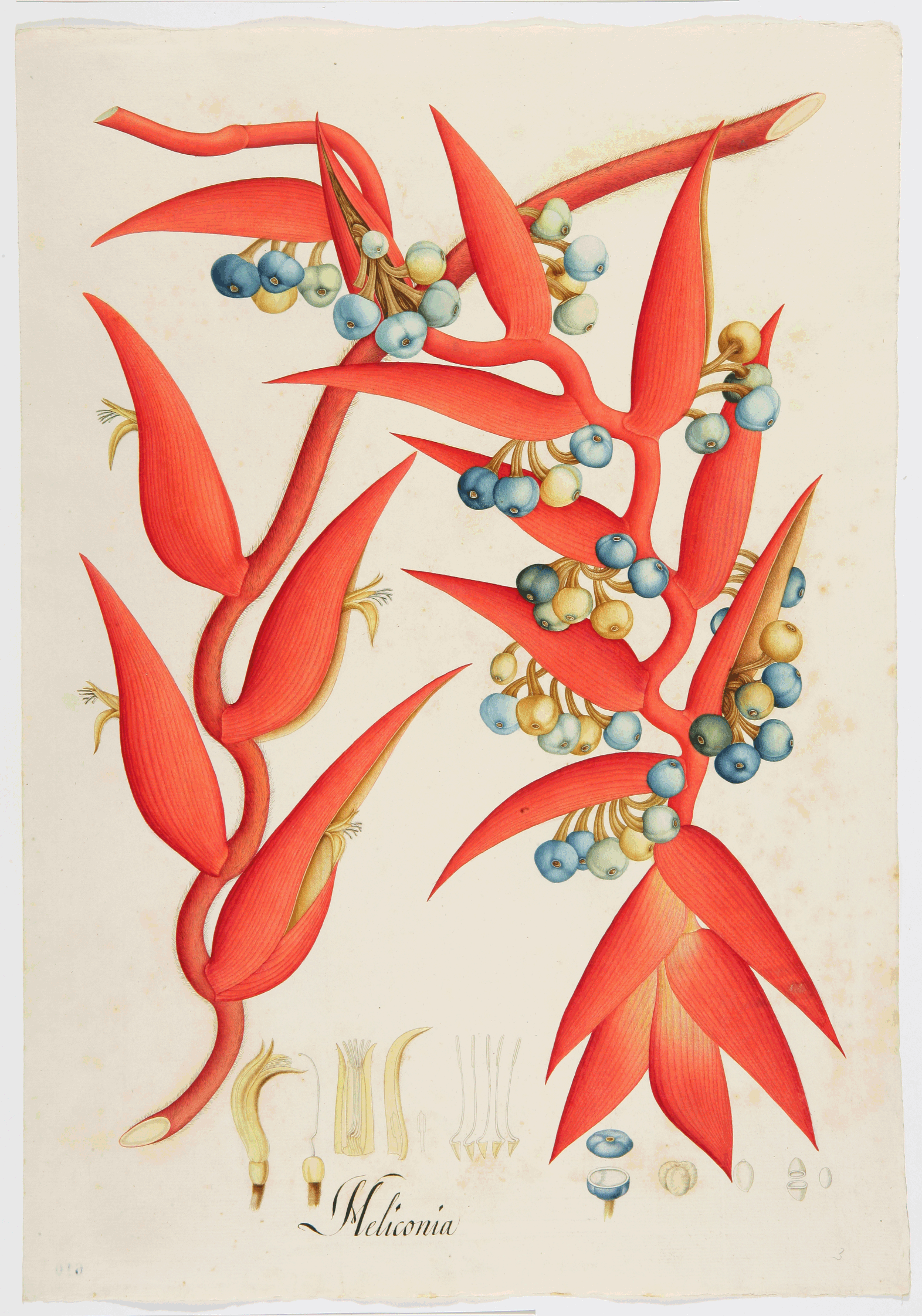
During roughly thirty years of sustained work, the Spanish botanical expeditions produced 12,000 botanical illustrations (see Plate 8). They employed more artists than naturalists, and yielded many more images than textual descriptions, specimen collections, taxonomic classifications or marketable natural commodities. Spanish naturalists went to enormous efforts to employ, train and supervise artists, and frequently addressed visual materials in their writings. And they shared this visual obsession with their European counterparts, who followed similar visual strategies and practices, even when their pictorial output often pales in comparison with the Hispanic missions. Clearly, images were of central importance to imperial botany. But why? The answer to this question is twofold. First, it involves the widespread practices of European natural history, which are addressed in this section; second, the difficulties that distance and mobility posed to imperial natural history, which are discussed in the next section.
‘Heliconia’, tempera on paper, 54 x 38 cm. J. M. Carbonell (Royal Botanical Expedition to the New Kingdom of Granada, 1783–1816).

Imperial botanists used, produced and circulated images because eighteenth-century European natural history – both in the Spanish Empire and elsewhere, at home or abroad – was a predominantly visual discipline (as discussed in Nickelsen’s chapter in this volume). The work of natural history required carefully conducted and disciplined practices of observation and representation, so that multiple observers could look in similar ways and produce understandable findings. Naturalists needed to look together, and to see the same thing. For that reason, botanical eyes were considered specialised instruments, and carefully calibrated through a multimedia training that involved plants, texts and images, and which was designed to develop specialised ways of seeing. Educated as expert observers and collaborating closely with artists, naturalists worked within a visual culture based on standardised ways of viewing nature and on pictorial conventions guiding its depiction. They resorted to images and visual metaphors in research and communication, whether published or manuscript. This visual approach to botanical knowledge was premised on a ‘visual epistemology’, and involved both the training and the everyday work of naturalists.
Naturalists considered visual skill the defining trait of their practice and the basis of their method. Collecting and classifying, the twin obsessions of early modern natural history, were predicated on the ability of the trained eye to assess, possess and order. Becoming a naturalist implied gaining familiarity with a rigorously defined series of texts that imparted a specific methodology, one that involved observing and describing in highly structured ways, as well as using books to connect and compare observations. This was particularly true with the ascendancy of the Linnaean taxonomic system, introduced in the Systema naturae (1735; see Müller-Wille’s chapter, this volume). Best known for outlining the sexual system of botanical classification, the Systema also proposed a methodology based on observation. By looking at a plant’s flowering structure and answering a series of questions, the observer could classify any plant within one of the twenty-four classes Linnaeus proposed.
Linnaeus emphasised visual epistemology even more strongly the following year, when he hired the great botanical artist Georg Dionysius Ehret to create a pictorial table illustrating his system (Figure 14.2). This famous table includes twenty-four figures, one representing the distinguishing traits of each of the Linnaean botanical classes, which are characterised by the structure of the flower and seed.19 By eclipsing the interrogation procedure, the table promoted Linnaean taxonomy as transparent and suggested that all it required was visual training. In order to classify a plant, it promised, the botanist needed simply to look at a flower, count its stamens and pistils, and note their structural arrangement. Who could not do something so simple?
Ehret’s table and the plates included in other works by Linnaeus soon appeared in practically every botanical textbook of the time – including Antonio Palau and Gómez Ortega’s Curso elemental de botánica (1785; 2nd edn. 1795), used for instruction at the Royal Botanical Garden. The extensive reproduction of these illustrations contributed greatly to the popularity of Linnaean classification, making it appear simple, direct and seemingly foolproof. In addition to enlisting recruits to the Linnaean ranks, they also shaped a shared visual and verbal vocabulary used by naturalists throughout and beyond Europe.
G. D. Ehret, Clariss. Linnaei M. D. Methodus plantarum Sexualis in Sistemate Naturae descripta (1736).

Trained as expert observers, the naturalists in the Spanish expeditions investigated American flora through visual epistemology. They relied heavily on books, which were key instruments not only in educating botanical eyes but also in the day-to-day work of botanical exploration, providing reference points against which naturalists considered and interpreted nature. As botanists travelled, they would observe a plant and then search the books they carried with them to establish whether it appeared in publication. If a specimen had been previously described, the naturalist would make a note to the effect that it was also found in that other locality, or improve or correct the existing description if he considered it unsatisfactory. If the specimen did not appear in any text, then the naturalist would consider himself its discoverer and compose a detailed description – and, whenever possible, also prepare an illustration – hoping to be the one to introduce the new specimen into the European catalogue of nature through publication. Botanical practice was overwhelmingly visual as well as deeply bookish.
The circulation of knowledge was the goal and the reason for expert observation. Skilled eyes would have been unnecessary if naturalists worked in isolation. It was because naturalists were in communication with one another, engaged in collective empiricism as they shared and compared their observations, that they needed a common visual language.20 Visual epistemology provided naturalists scattered across the globe with a shared approach to the study of natural history, based on a method of comparative and evaluative observation that contrasted images, objects and words. By articulating definite criteria for training naturalists’ eyes and for their engagement with multimedia observations, visual epistemology turned multiple and far-flung observers into calibrated instruments that worked in concert. This synchrony was particularly crucial in imperial contexts. If taxonomic botany – the identification and classification of plants – required collective empiricism, the stakes were even higher for economic botany, which engaged naturalists as imperial agents. Standardised observation and representation allowed naturalists to communicate not only with one another but also with imperial and colonial administrators, and to make a case for how and why their expertise mattered.
Travelling artists were central to this process, as they translated naturalists’ observations into the representations that would embody and transport both specimens and visual expertise. The Spanish naturalists worked extremely closely with their artists, constantly engaging with their work – literally looking over their shoulders as they drew, as suggested in a self-portrait by one of the expeditions’ artists (Figure 14.3). The relationship between naturalists and artists was thus both close and hierarchical. Naturalists exercised great authority over their artists, supervising and directing artists’ work and use of time, regulating their bodies by mandating where and when they should travel, and affecting their productivity by allocating work supplies.21
J. del Pozo (Malaspina expedition), self-portrait drawing a Patagonian woman (c.1790), pen and wash drawing, 18 × 24 cm. Location unknown.

The way in which vision came to define the practices and the very persona of the naturalist can be seen in the portrait of one of the Spanish botanists, José Celestino Mutis, director of the Royal Botanical Expedition to the New Kingdom of Granada (1783–1816) (Figure 14.4).22 The painting depicts Mutis in the very act of conducting a botanical observation. It invites the viewer into Mutis’s study, allowing us to witness him at work. Mutis is shown sitting at a table, deeply engaged in the pursuit of his scholarly craft. His focused gaze fixes on the viewer with weary patience, as if we had just burst into his study of muted greys and browns and interrupted his silent labour. He has lifted his head but his body remains hunched over in concentration, eager to resume the examination of the flower he holds up. A branch of the same plant lies ready to be pressed between sheets of paper in order to become a specimen in a herbarium or collection of dried plants. Books scattered around the table will help Mutis corroborate his description and classification of the plant. The books outline the task at hand: if the plant that Mutis examines has already appeared in a publication, he will determine whether it has been assessed correctly or whether the entry needs emendation. Any discrepancy between published materials and the specimen that Mutis observes will provide a chance to contribute to the literature with a correction. Even better, if the plant does not appear in any of the existing sources on South American flora, Mutis could describe it in publication and in this way become the discoverer of a new species.
José Celestino Mutis (c.1800), oil on canvas, 124 × 92 cm.

The naturalist’s job, the portrait claims, is to observe. The magnifying lens that Mutis holds in his right hand serves as a symbol of the acute visual skills that characterise him as a botanist. A simple instrument, it suggests that the truly magnificent and sophisticated machinery at work is the naturalist’s gaze. This is not simple looking but rather expert, disciplined, methodical observing. And expert looking is connected to other activities: collecting, as evidenced by the plant, books and herbarium, comparing and classifying, as signalled by the presence of books, and writing and drawing, as indicated by the pen in Mutis’s right hand and the sheet of paper before him on the desk.
Mutis’s portrait not only addresses the process of observation, but also hints at some of its goals and rewards. Like the magnifying lens, the flower that Mutis so attentively considers celebrates his work. It is carefully presented to the viewer, painted in a bright red that stands out vividly against the muted colours that dominate the portrait. This particular plant has a starring role in the canvas because it is a specimen of Mutisia, a new American genus named in his honour. By calling attention to his namesake plant, the portrait celebrates Mutis’s talents as a botanical discoverer and relates them to his capacities as an observer.
Although Mutis is portrayed as a solitary figure, his work depended on close collaboration with plant collectors, artists, patrons, imperial administrators and other naturalists. Given the global interests of eighteenth-century natural history, visual epistemology was a collective process that involved bridging distances. Trained observers voyaged to remote lands to gather observations and specimens, and in turn these stabilised incarnations transported distant nature so that it could be studied by observers who had not themselves travelled. At the core of the notion of observation lay an individualistic rhetoric of autopsy – the process of having experienced or witnessed for oneself, with one’s own eyes. However, observation was often a collective endeavour, one that drew on the first-hand analysis of secondary materials in various media, or on the first-hand observations of others. As the portrait suggests, visual epistemology not only certified botanists’ abilities and standardised botanical findings, it also served to make observations and specimens mobile and thus to overcome the challenge that distance posed to imperial botany.
The challenge of distance
The thorny issue of distance and place can be approached by juxtaposing Mutis’s portrait with another painting produced by an artist in his workshop, which elucidates the long-distance circulation of people, specimens and images. The painting, shown in Figure 14.5, depicts the renowned Spanish botanist Antonio José Cavanilles, director of the Royal Botanical Garden of Madrid between 1801 and 1804, and Mutis’s long-time correspondent and supporter.23 Both portraits were produced at the turn of the nineteenth century in Bogotá, both emphasise the importance of visual epistemology in natural history, and both connect observational acuity to the honour of discovery. The paintings also allow us to reflect on the role of travelling images in allowing long distance observation. Cavanilles’s portrait shows him in profile, from the waist up, sitting before a table. With his left hand, he points to a botanical illustration that he studies with unblinking attention. The image is clearly recognisable as one of the works produced by the New Granada expedition. Gazing attentively at the image, the botanist observes the various parts of the plant and immediately transforms his visual analysis into a textual taxonomic description, which he writes with a quill pen on a notebook that lies open on the table. Eye and hand work in coordination, image produces text. Set against a dark background and the lustrous velvety black of Cavanilles’s priestly garments, the light-coloured pages pop brilliantly. The botanical illustration is as much a protagonist of this painting as the man rapt in its study. It serves to connect the naturalist in Spain and the artist in America, erasing the distance between them. Although the portrait is unsigned and undated, the artist inscribed himself into the painting in a clever way. The name visible at top of the image, Rizoa, points to the identity of both a South American plant and a South American artist, Salvador Rizo, who was the expedition’s lead artist and Mutis’s second-in-command, and in that capacity directed the artistic workshop that produced illustrations exactly like the one Cavanilles is examining. Through this painting, Rizo thanked Cavanilles for naming this American genus after him.
Antonio José Cavanilles (c.1800), oil on canvas, 86 × 66 cm.

Rizo’s portrait of Cavanilles celebrates both artist and naturalist through a botanical identity, much as Mutis’s portrait honoured him through the Mutisia. The replacement of a botanical specimen with an image is significant because it demonstrates how Mutis and Rizo expected naturalists in Europe to use the expedition’s illustrations. A naturalist based in South America could observe multiple fresh specimens over the years and work with an artist to create an image that presented a composite result of all those observations. This would be impossible to achieve with a single dried specimen, which inevitably included accidental particularities. The picture, by comparison, incarnates not an individual American specimen but the many plants and observations that allowed the team of naturalist and artist to produce an idealised version of this type of plant. This painted composite specimen made it unnecessary for Cavanilles to travel, allowing him to sit at his desk in Europe and observe South American flora ‘first-hand’, using this rendition to classify and name it.
Conclusion
In the last decades of the eighteenth century, the Hispanic world buzzed with scientific activity. A flurry of expeditions criss-crossed the empire, surveying, collecting and documenting its natural history, as part of a process of reassessing and rediscovering kingdoms that – though long-held – remained in crucial ways half-known. In addition to these travellers, throughout the viceroyalties, local institutions, and a wide cast of characters that included both Europeans and Americans, participated in a concerted effort to identify useful and valuable natural products. In the Hispanic world, these attempts at imperial renovation through useful science were framed not only within the context of Enlightenment ideologies and policies, but also as the continuation of ventures that had taken place at a glorious moment of imperial expansion in the sixteenth century.
Imperial botany was central to these efforts. Natural history expeditions pursued three related goals, the first of which was economic botany. In a climate of fierce economic and political competition among European nations vying for primacy as commercial and imperial powers, botany appeared particularly well suited to fulfilling ambitions of controlling trade in useful and valuable natural commodities. Eighteenth-century European botanists – in Spain and elsewhere – promised administrators that they could identify desirable plants throughout the world and if necessary successfully transplant them to other locations, convincing their patrons of the need to fund expeditions that would exploit items such as coffee, tea, spices and medicinal plants. Casimiro Gómez Ortega, director of Madrid’s Royal Botanical Garden, assured the Spanish imperial administration that its vast and fertile territories must surely hold valuable botanical commodities like cinnamon, pepper, tea and nutmeg, which would allow Spain to compete with the valuable Dutch trade in Eastern spices, British profits from tea and French successes with coffee transplantation. He followed with interest and concern activities at the Jardin du Roi in France and Kew Gardens in England, emulating their examples and seeking to outdo them. Meanwhile, Britain and France cast envious glances at the Spanish monopolies in cinchona and cochineal, two valuable American natural commodities that they attempted to locate in their colonial holdings or to steal away from the Spanish Americas. Spanish botanists, however, failed to deliver on their economic promises.
The expeditions proved much more successful at fulfilling their two other objectives, namely taxonomic botany and collecting. With the ascendancy of the Linnaean system of classification and the increasing access to non-European flora provided by imperial and commercial voyages, European botanists in the second half of the eighteenth century embarked on a global mission to survey and classify all the world’s plants. Spanish naturalists had privileged access to the Spanish Americas, and as a result other European naturalists followed their work with anticipation and great interest. With their lengthy stays in the Americas, access to local resources and expertise and incomparable artistic workshops, the Spanish expeditions were uniquely poised to satisfy the European demand for depictions of New World flora.
Scientific voyaging was expensive, uncomfortable, exhausting and dangerous, when not altogether deadly. Cabinet naturalists who stayed behind in Europe, Mutis noted, had no idea of the ‘unspeakable hardships’ that voyagers faced:
Savants, in their cabinets or in schools, spend their days in great comfort, gathering the fruit of their diligence without moving. A traveler must spend a great part of each night ordering and describing what he gathered in the field during the day, and this after having suffered the conditions of that Season; the roughness and pitfalls presented by the ground he surveys, which tend to be greatly varied; the discomfort of insufferable insects that surround him everywhere; the frights and dangers of many poisonous and horrible animals that at every step scare him, terrify him about the austerity of a truly austere and boring life that through the heat, moors, and deserted places breaks down and wears out his body.24
For imperial botanists, images offered solutions to two important problems: the challenge of collective empiricism, that is of making sure that individuals looked at plants in the same way and saw the same thing, and the challenge of distance, allowing them to stabilise and mobilise specimens from far-off lands, allowing cabinet naturalists to observe them first hand at a convenient distance.